 Қазақша
 Русский
  English
  简体中文
简体中文 

 Свяжитесь с нами


The first hybrid locomotive in Kazakhstan, an electric truck fleet and solar-powered terminals: Atasu Group is implementing three sustainability projects at once. The program was launched in 2021 following an independent ESG audit and has since become part of the company's long-term strategy.
Starting an ESG Journey
Global logistics is undergoing a major transformation. The key factors are ever-increasing fuel prices, stricter environmental regulations, growing demand from clients that have adopted their own climate policies, ESG requirements set by investors and banks.
Until recently, only speed and cost of transportation were the primary considerations in the industry. But today, large operators such as Maersk, DP World and DHL are actively investing in ESG programs, infrastructure and projects with a keen focus on carbon footprint reduction. Atasu Group, a leading transportation and logistics company in Kazakhstan, is pursuing similar initiatives not because sustainability is in vogue, but because it is essential for remaining relevant in the long term.
Our company was one of the first in the region to engage independent experts to assess its ESG performance and develop a roadmap. One of the program's environmentalgoals is to reduce its carbon footprint. To achieve it, we have simultaneously launched three projects.
Green Transport for Kazakhstan’s Logistics Industry
Atasu Group has developed a program for switching its fleet from diesel to electric vehicles. The company has initiated negotiations with domestic and foreign automotive companies about production of electric trucks. The pilot batch will consist of50 vehicles The next phase will expand the fleet to 100 vehicles, followed by 350. The first electric trucks will enter service by the end of 2026.
This decision is not just about purchasing new equipment but also making a statement: such transport should be manufactured in Kazakhstan. Working with the domestic automotive industry, Atasu Group is going to encourage manufacturers to invest in designing electric trucks and creating service infrastructure for their maintenance. A successful implementation will set an example for other transport companies to follow. This is how one company’s undertaking drives change in the entire field.
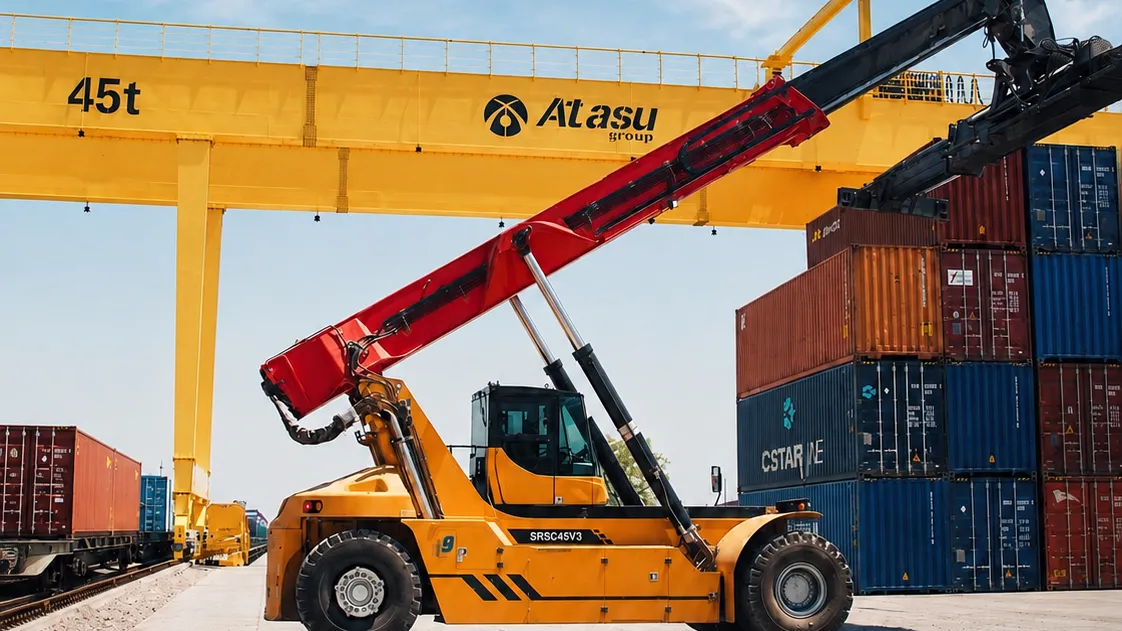
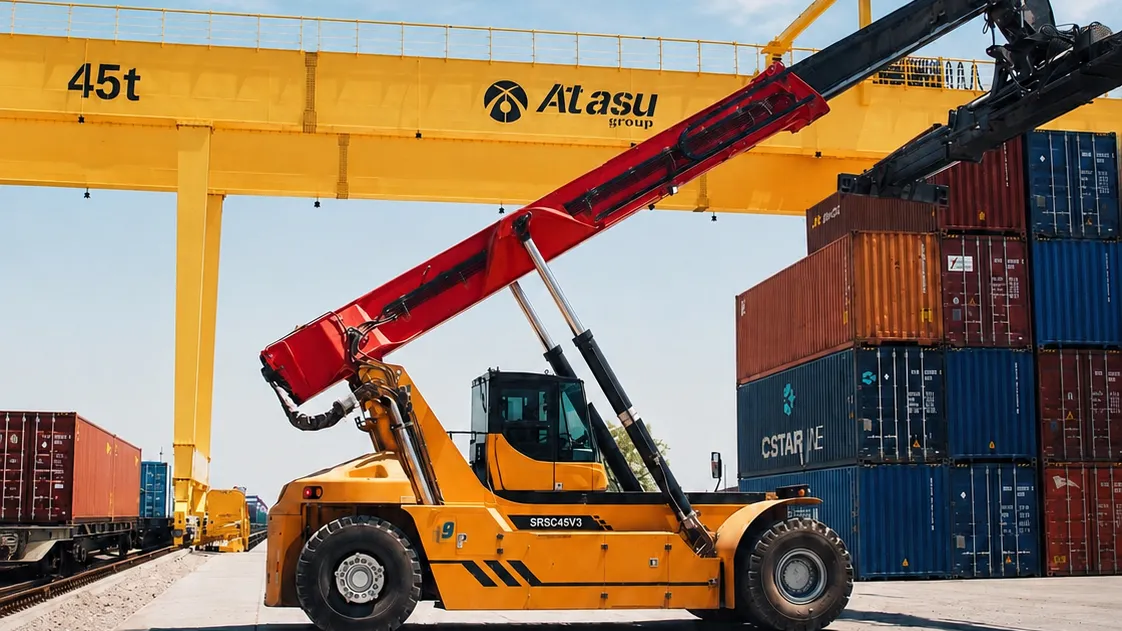
At the same time, the company is switching to electric cargo handling equipment. Until recently, there were about 20 diesel container reach stackers operating at our terminals. 50% of themwill be replaced by electric machines. Besides, in 2025–2026 the company has purchased and commissioned four electric 50-ton gantry cranes with spreaders. As a result, the speed of cargo handling operations has increased, while operating costs and emissions have dropped.
First Hybrid Locomotive: How Atasu Group Is Transforming Rail Logistics
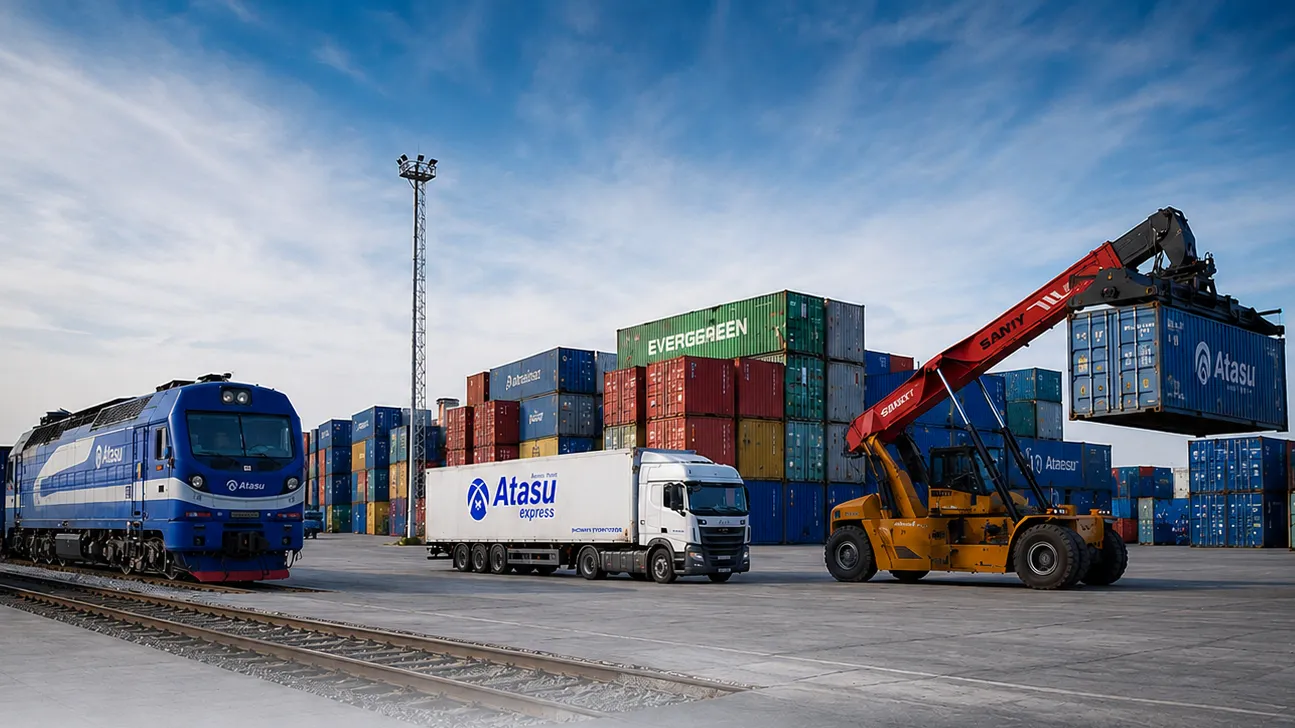
In October 2025, Atasu Group launched a locomotive fleet modernization program: one of the company’s locomotives is going to be converted from diesel to diesel-electric hybrid. By the end of 2026, the company will receive Kazakhstan's first hybrid locomotiveand put it into operation at Dostyk terminal.
Switching to a hybrid locomotive offers four benefits:reducing fuel consumption by 50%, reducing equipment downtime, lowering power consumption and improving cargo-handling efficiency. The company plans to modernize its entire locomotive fleet.
The success of the pilot project will lead to the next stage, i.e., expandingthe technology across Kazakhstan.
Energy-Saving Terminals: from External Power Sourcestoward Self-Generated Power
Atasu Group is simultaneously modernizing existing terminals and developing new design principles for its future infrastructure.
The terminals are currently integrating AI systems for cargo storage and distribution management, energy monitoring systems, smart lighting, climate control systems.
The first facility to fully implement these principleswill become Class A+ warehouses with a total area of 40, 000 sq m that are currently under development at Burunday. There, solar panels are will be installed not only on the roof of a building, but on its walls as well. Solar energy will cover part of the terminal’spower consumption, which is a step towards renewable energy.
Costs and Profits: How Modernization Pays Off
Modernizing infrastructure—transportation, crane fleet, locomotives and terminals—requires significant investment and a long-term perspective. These projects do not pay for themselves quickly. But the logic here is different: the cost of inaction becomes greater over time.
Electric and hybrid transport reduce fuel costs significantly. Solar power generation reduces dependence on external power grids and protects against growing tariffs. Smart terminal control systems reduce losses and increase cargo handling speed. Overall, this not only reduces the carbon footprint but also improves operational efficiency.
Atasu Group isn't waiting for modern infrastructure to emerge—it's building it. The first hybrid locomotive, domestically produced electric trucks and terminals with solar power generation are not just theoretical concepts, but practical solutions that the industry and the government can scale up.
There's more to these projects than just upgrading equipment. The era when businesses could rely indefinitely on coal and oil is ending, and along with the equipment, mindsets must change.
Atasu Group is building a culture where resource conservation and a focus on renewable energy are the norm for every aspect of its operations. It takes a few months to install a new crane but years to build a culture—that's why it's crucial to start now.