
 Қазақша
 Русский
  English
  简体中文
简体中文 

 Бізбен байланыс


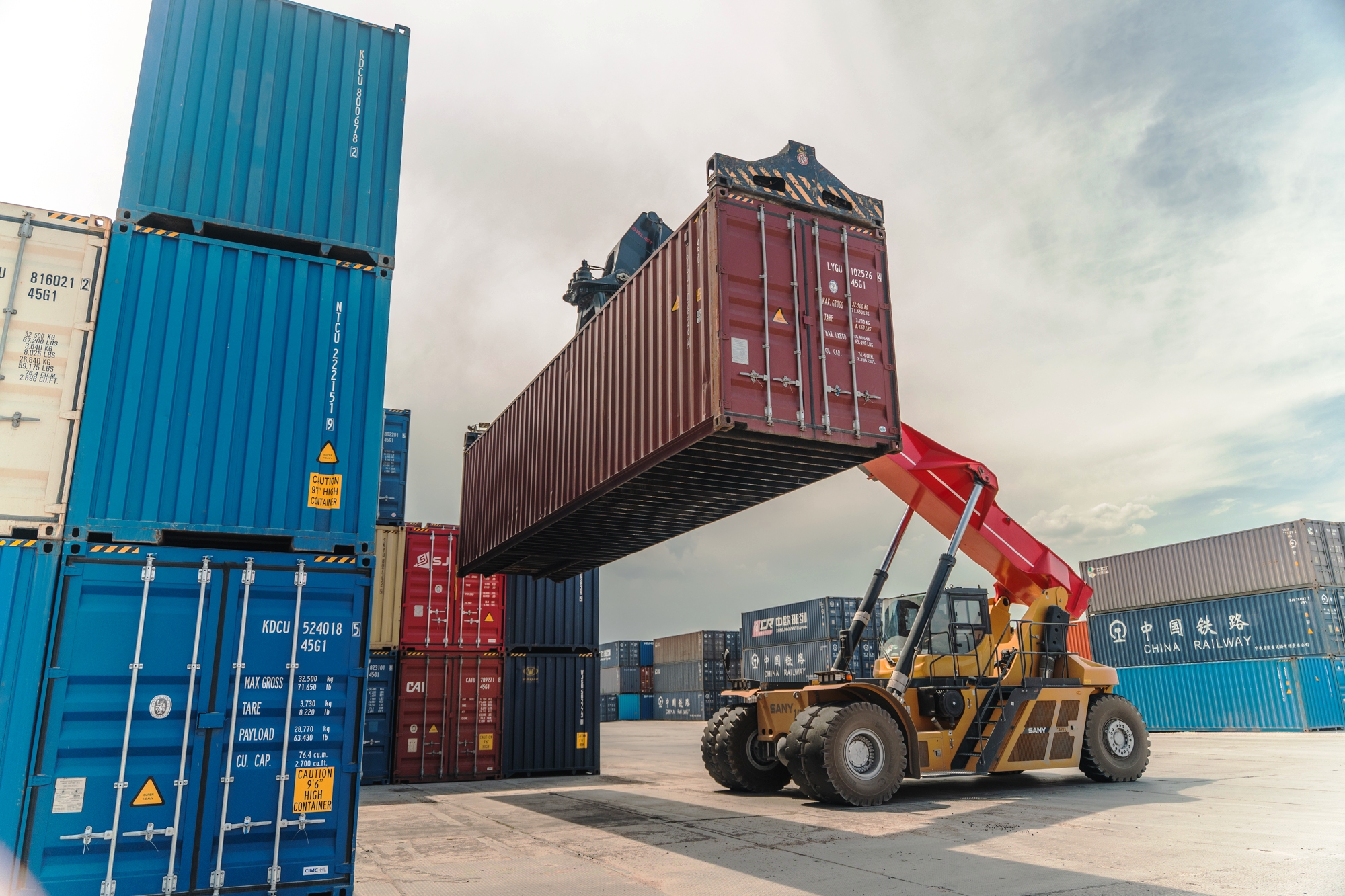
After traveling thousands of kilometers across China, a container reaches Kazakhstan’s border. Here, it is transshipped from a narrow-gauge wagon to a broad-gauge wagon.
This is a mandatory procedure because the railway networks of China and Kazakhstan were built to different gauge standards. Therefore, when crossing the border, cargo must either be transshipped to a wagon with the appropriate gauge or the wagon’s bogies must be replaced. For container transportation, transshipment is the most straightforward option.
At this stage of the journey, shipping documents must be verified. The container may also be inspected if necessary. Missing or incorrectly completed documents can cause delays. That is why Atasu Group specialists always remind consignors to prepare all shipping documents in advance.
Why Do China and Kazakhstan Have Different Railway Gauges?
Railways in Kazakhstan built during the Soviet era use a broad gauge of 1,520 mm, which is the standard used across most CIS countries. China, meanwhile, built its railways to a gauge of 1,435 mm, which is the standard used in most countries around the world.
The seemingly small difference of 85 mm is enough to prevent a wagon from continuing directly onto a railway with a different gauge. This is why one of the two operations described above is required.
When the Gauges Meet
There are two railway border crossings between China and Kazakhstan and both are equipped to handle the change of gauge. The first, Dostyk–Alashankou, has been operating since 1992 and is the first overland port of entry between the two countries. To this day, most containers traveling along the China–Kazakhstan–Europe route pass through it. The newer Khorgos–Altynkol crossing serves as an alternative. Although the two border crossings differ in service rates and processing times, the way cargo is handled is essentially the same.
What Happens to a Container?
As mentioned above, the main method of changing railway gauges for container transportation is transshipment. Using a crane, a container is lifted from a Chinese narrow-gauge wagon and placed onto a Kazakhstani broad-gauge wagon. The cargo inside remains intact. The container itself simply changes wagons.
Another option is to replace the wagon’s wheelsets: the bogies are removed from the wagon body and replaced with bogies equipped with wheelsets suitable for the new gauge. However, this method is mainly used for certain types of rolling stock and is relatively rare for container trains.
In either case, some downtime at the border is inevitable, although its duration may vary.
What Affects the Delivery Time?
Delivery time usually depends on the distance the cargo has to travel. However, for cargo coming from China, one of the key factors is the time required to pass through the border crossing.
In fact, changing the railway gauge itself does not take much time. Crane operations take only a few minutes, and under normal circumstances, a container spends several hours at the border. If the downtime extends beyond a day, this usually indicates that something has gone wrong.
Atasu Group works to prevent such delays. We own a terminal directly at the border, as well as a fleet of broad-gauge wagons. By arranging customs clearance on site, we help ensure that transshipment is carried out smoothly and quickly, without delays lasting for days.
What Role Does Atasu Group Play in the Supply Chain?
Atasu Group owns the Dostyk Cargo Service terminal on the China–Kazakhstan border, covering an area of 190,000 m². The terminal processes up to 5,000 wagons per month. A single facility handles wagon reception from China, container transshipment, storage and customs clearance.
Containers bound for other countries transit through Kazakhstan. Cargo destined for Kazakhstan is forwarded to its destination stations. A significant portion of these shipments is destined for the Almaty hub.
From Dostyk, Atasu Group continues the transportation process within its own infrastructure. Containers are sent to the company’s terminals in Burunday and Zhetysu, both located on the outskirts of Almaty, and are then delivered by road to the recipient’s warehouse. Receipt, processing and dispatch are coordinated at every stage, reducing the number of handovers between different operators. The company’s own rolling stock fleet also helps address one of the route’s main constraints: a shortage of available wagons.
This is how a full-cycle logistics operator works: over more than 28 years, Atasu Group has built infrastructure at key hubs along the route and brings transshipment, wagon provision, customs clearance and delivery together into a single process.
What Does This Mean for the Consignor?
The change of railway gauge at Dostyk is a mandatory step for cargo arriving from China and cannot be bypassed. However, it can be effectively managed.The outcome depends on the selected border crossing — Dostyk or Khorgos — the transportation scheme, the transshipment process itself and the operator responsible for carrying it out. Effective management at the border can make this stage a predictable part of the route rather than a source of unplanned delays.
The exact processing time depends on the workload of the border crossing and the type of container, so it is calculated for each shipment individually. To estimate the delivery time and cost via Dostyk, please contact Atasu Group.


